Smart Home eCare — LoRaWAN Edition
Two new wireless, camera-free monitoring systems built on long-range, low-power LoRaWAN connectivity — designed for hospitals, care homes, and community service centres.
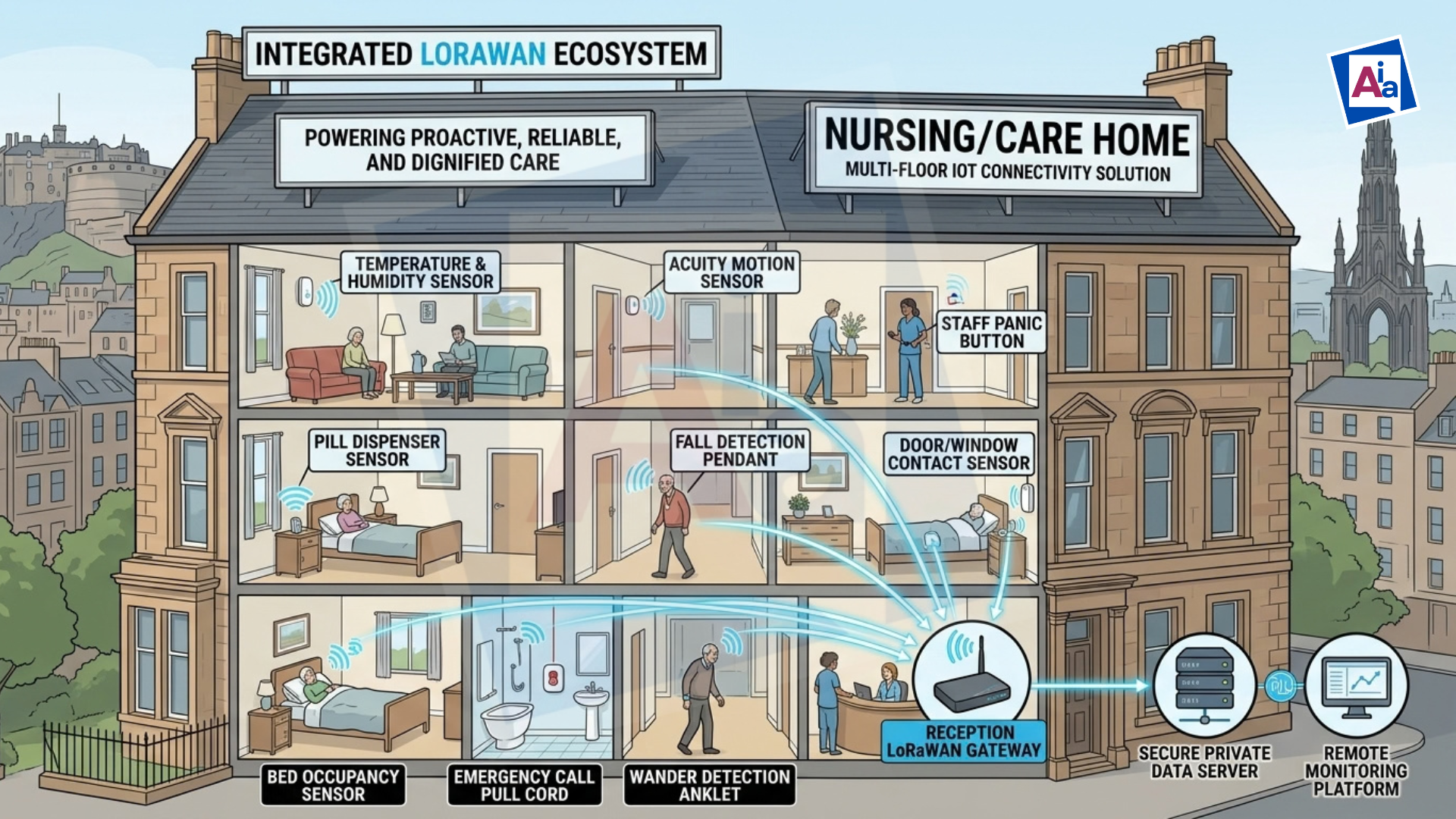
A Complete IoT Connectivity Solution for Nursing & Care Homes
One LoRaWAN gateway powers proactive, reliable, and dignified care across every floor — connecting fall detection pendants, bed occupancy sensors, door contacts, panic buttons, and wander detection anklets to a single secure monitoring platform.
Four Major Benefits for Care Facilities
LoRaWAN delivers the range, capacity, and efficiency that modern healthcare environments demand — without the cost and complexity of traditional networks.
Massive Device Density & Scalability
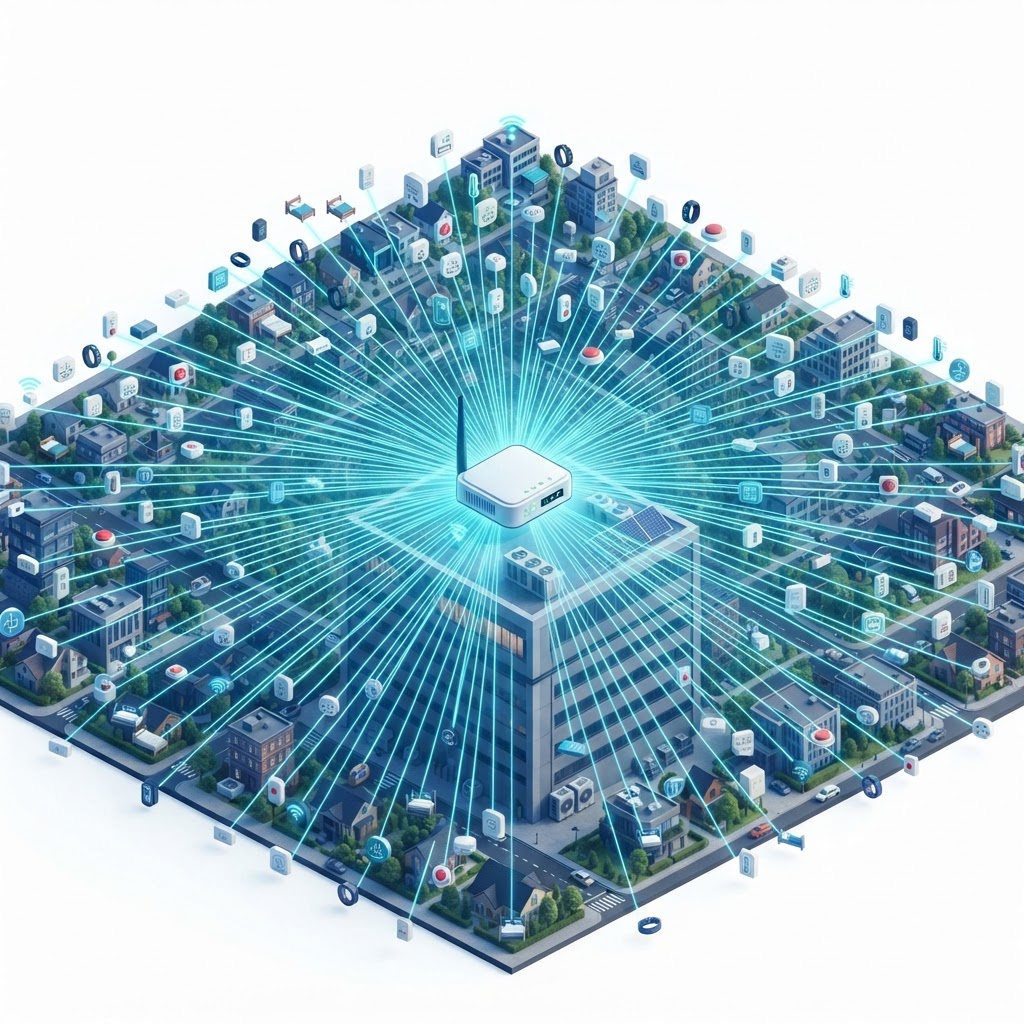
A single LoRaWAN gateway can support thousands of connected devices simultaneously — from bed sensors and fall wearables to air monitors — making it easy to cover an entire facility without overloading the network.
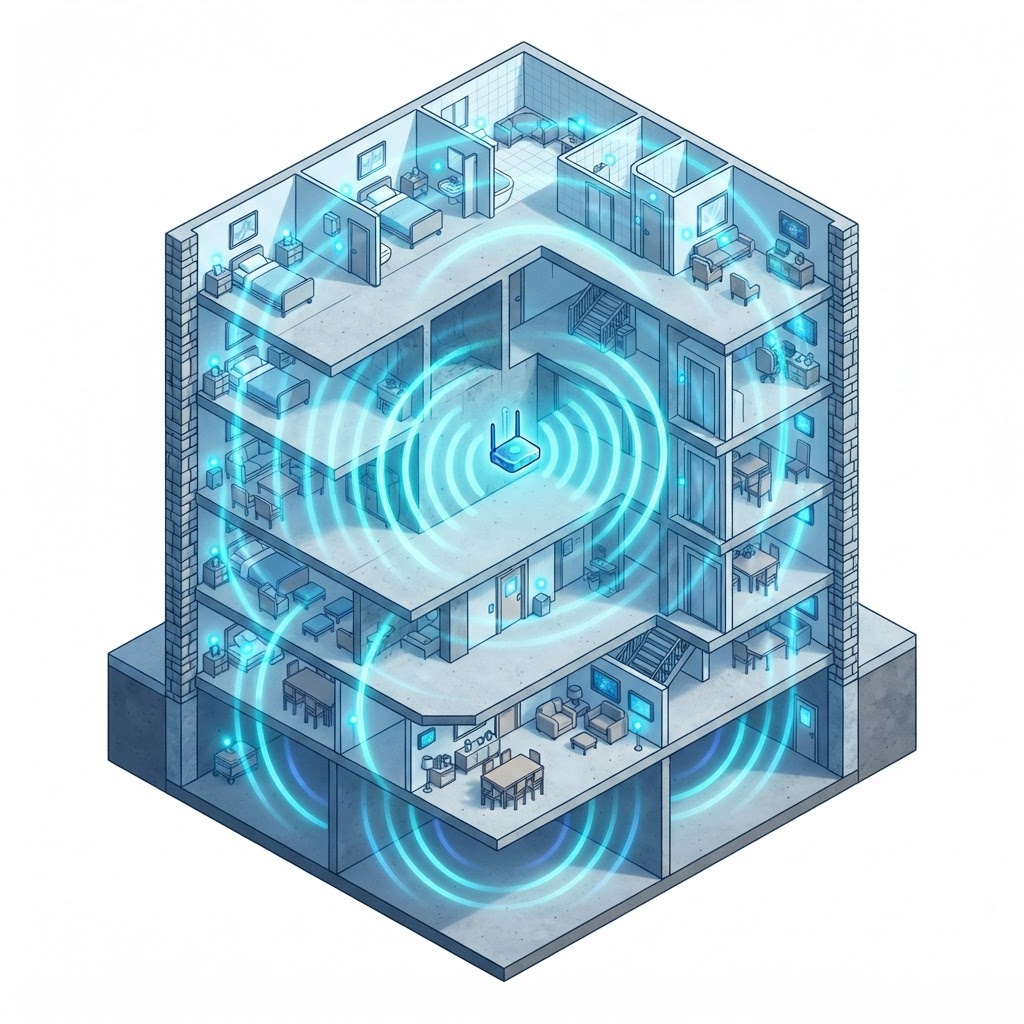
Deep Indoor & Multi-Floor Penetration
Sub-GHz signals pass through thick stone, concrete floors, and basement levels, eliminating signal dead zones where standard Wi-Fi or cellular networks fail.
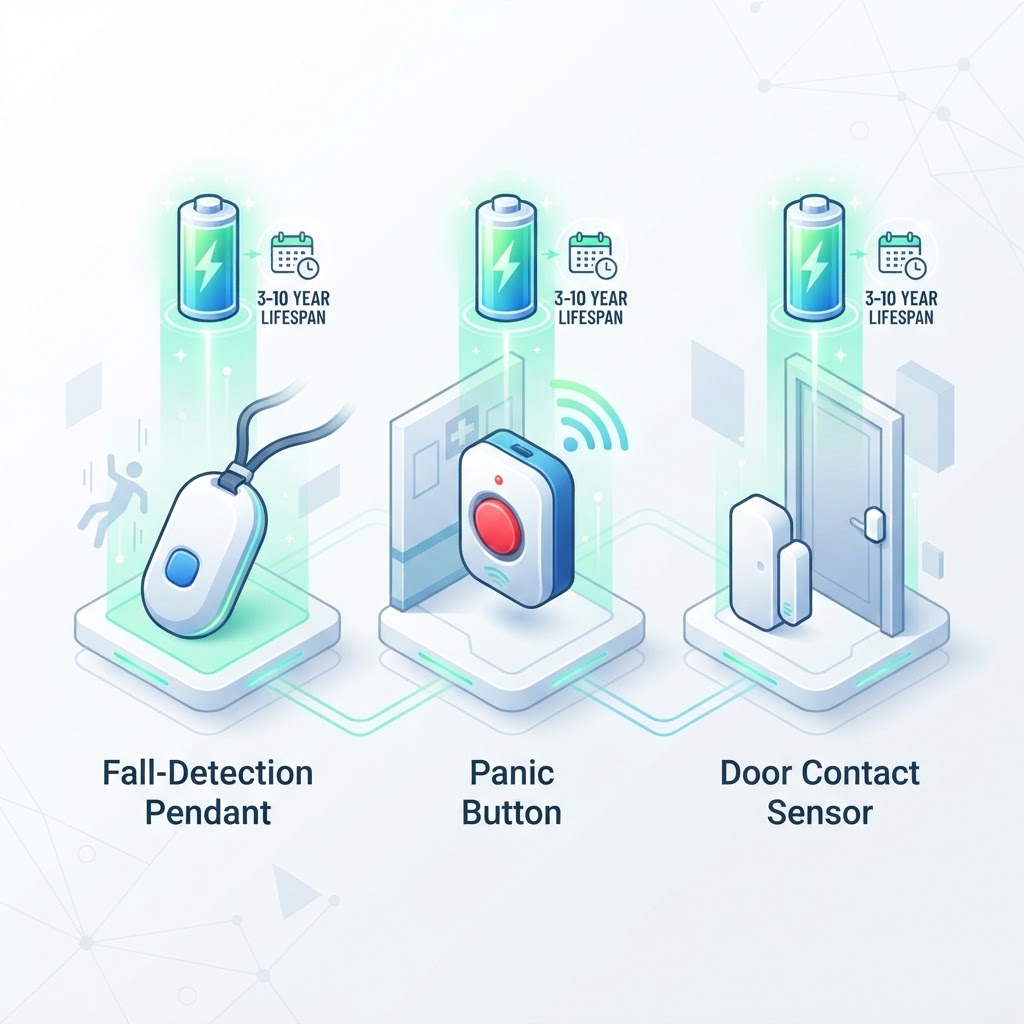
Multi-Year Battery Life
Ultra-low power consumption lets wearables, panic buttons, and door sensors run on simple internal batteries for 3 to 10 years without requiring daily charging or maintenance.
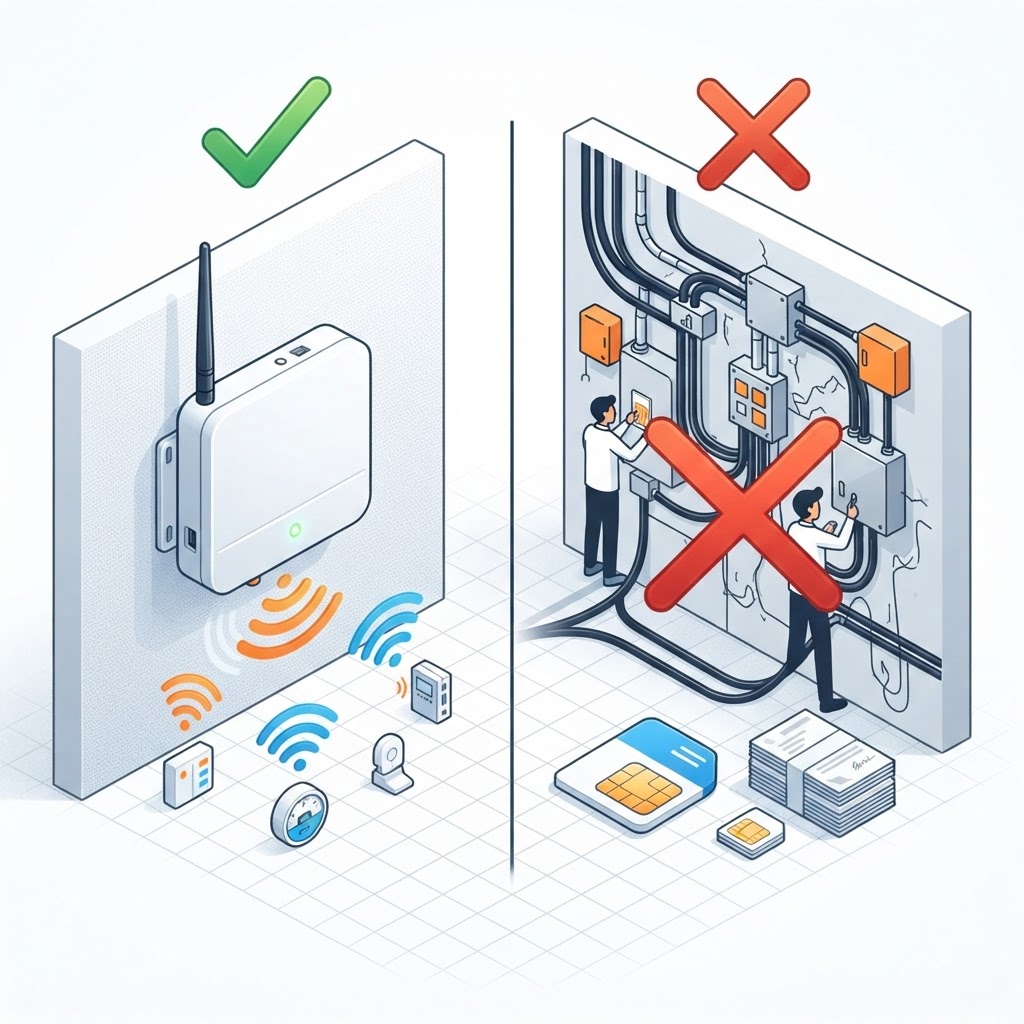
Low Infrastructure Costs & Simple Deployment
Operates wirelessly on free, unlicensed spectrum with no expensive facility rewiring, heavy IT infrastructure upgrades, or recurring SIM card subscription fees.
How Many Devices Can a LoRa Gateway Support?
A single LoRaWAN gateway can support a wide range of connected devices depending on how frequently each device transmits and the payload size. The table below illustrates typical capacity across low, moderate, and high traffic scenarios.
Low Traffic Applications
Tier 1
Moderate Traffic Applications
Tier 2
High Traffic Applications
Tier 3
| Parameter / Aspect | Low Traffic Applications | Moderate Traffic Applications | High Traffic Applications |
|---|---|---|---|
| Transmission Frequency | 1 – 2 times per day | Every 10 – 15 minutes | Every 30 – 60 seconds |
| Typical Payload Size | 10 – 20 Bytes | 20 – 50 Bytes | 50 – 100 Bytes |
| Airtime per Uplink (SF7) | ~30 – 50 ms | ~50 – 100 ms | ~100 – 300 ms |
| Single 8-Channel Gateway Capacity | 10,000 – 50,000+ devices | 1,000 – 5,000 devices | 100 – 500 devices |
| Single 16-Channel Gateway Capacity | 20,000 – 100,000+ devices | 2,000 – 10,000 devices | 200 – 1,000 devices |
| Example Use Cases | Smart water/gas meters, smoke detectors | Smart agriculture, environmental sensing | Fleet tracking, real-time industrial alarms |
Capacity figures are indicative and depend on regional duty-cycle regulations, spreading factor distribution, and application-level retransmission behaviour.
Smart Calling System
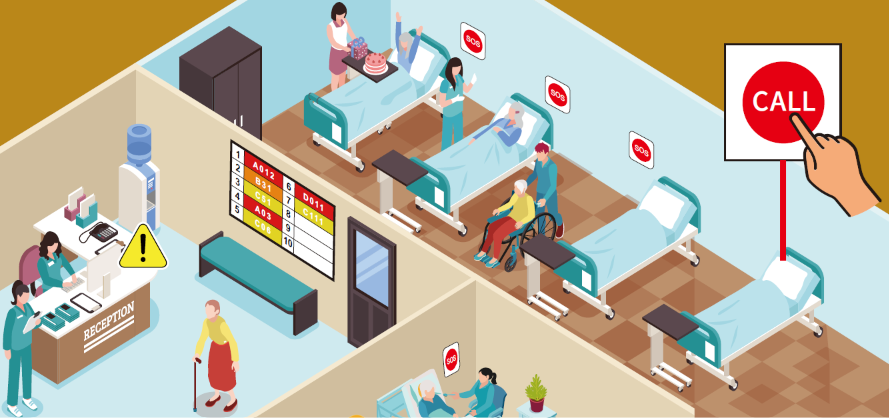
A wireless calling solution for care homes and community service centres, helping residents receive timely care support while reducing staff workload. Built on LoRaWAN — a low-power, long-range IoT protocol offering strong interference resistance and wide coverage for stable, long-term operation.
Call Button
Sends a help request instantly — supports both push-button and pull-cord operation for bedside or bathroom use.
Signal Reception
Multiple wireless receivers cover the entire facility, supporting a range of up to 500 metres.
Alarm & Notification
Central screen and management system display call information in real time with synchronised voice alerts; zone screens in corridors and public areas show the call location.
Timeout Reminder
If staff do not respond in time, the system automatically sends a second voice reminder to ensure no call is missed.
Device Management
Supports dynamically adding/removing devices, location adjustment, renaming, and full maintenance tracking.
Battery & Monitoring
Call devices run on AAA batteries with an expected lifespan of around 12 months, with built-in battery level monitoring and low-battery alarms.
Device Status Monitoring
Automatic offline/failure alerts — if a call device or receiver stops communicating normally, the system notifies maintenance staff immediately.
Technical Specifications
Smart Bed Exit Detection System
A camera-free wireless bed-exit alarm system for hospitals and care homes. Zone-based pressure sensing and bed rail detection deliver real-time, dignity-preserving monitoring with pre-exit alerts sent straight to the nurse station.
No Camera Required
A.I. observes body movement, zone sensing, and bed rail dynamics to determine if a patient has left, or is about to leave, the bed — with zero cameras and zero privacy concerns.
Posture Recognition
Real-time detection of lying-down, sitting-up, and pre-exit states, giving carers advance warning before a fall risk occurs.
Scheduled Turning Reminders
Automatic reminders for scheduled repositioning, helping prevent pressure sores for bed-bound residents.
Flexible Sensor Pad
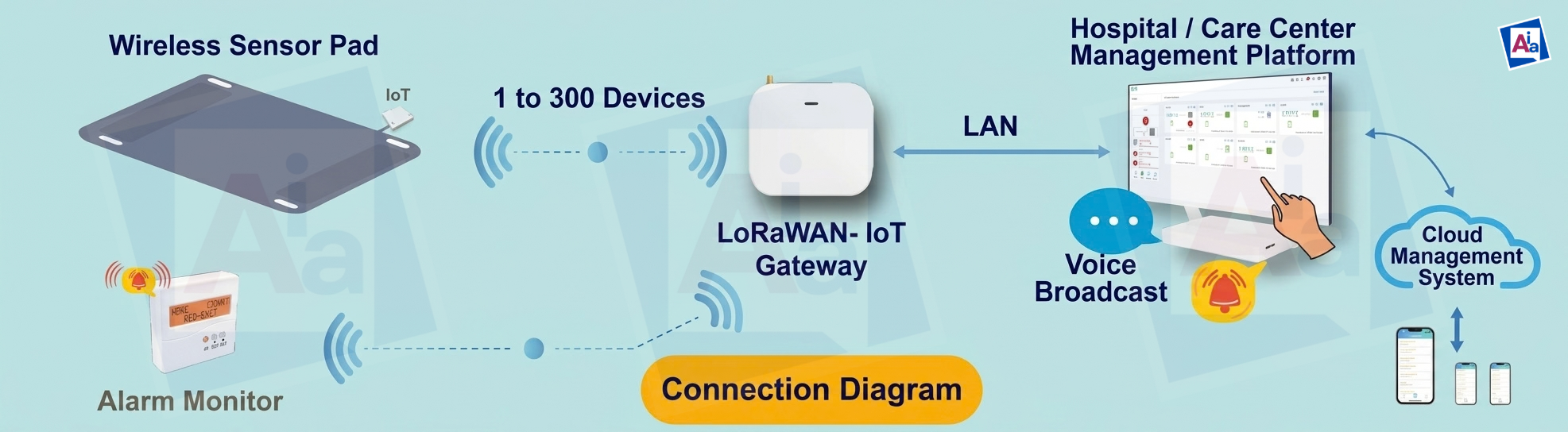
A bendable pad with hip and upper-body pressure sensors that fits different mattress types — supports 1 to 300 devices per deployment.
Voice Announcement
Pre-exit alerts trigger instant voice announcements, giving staff time to respond before a resident is fully out of bed.
Multi-Channel Alarms
When a triggering event occurs, alerts are sent instantly to the nurse station control platform, alarm devices, and mobile apps.
LoRaWAN Connectivity
Sensor data flows over a low-power LoRaWAN-IoT Gateway to the cloud management system and hospital/care centre platform.
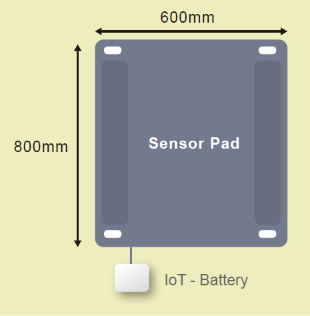
Wireless Pad Sensor
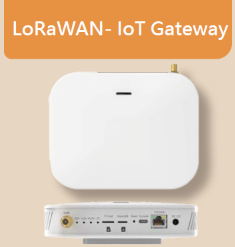
LoRaWAN-IoT Gateway